Life Before Screens

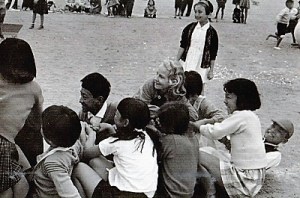
Participating in a tug-of-war with my Japanese playmates.

As someone who frequently needs to be torn away from my laptop or iPad at all hours of the day and night, I’ve been thinking back to my “life before screens” childhood, and wondering if kids today are getting enough playtime of the non-video game variety. TVs were readily available and in many homes at the time, but my parents chose not to have one. Did I have any less fun than friends with screens? I don’t think so. With so much time to fill after finishing my daily assignments (correspondence courses provided by the Ontario Dept. of Education), reading and physical activities that called on the use of my imagination became a big part my life.

For example, the characters in many of the books I read as a young girl, such as Louisa May Alcott’s Jo and L.M. Montgomery’s Emily, not only sparked my desire to write, but also influenced the types of games I created for entertainment when I was a child. If you were to go back in time and choose any one of my treasured books from a shelf, you would find a neatly cut, half-envelope glued inside the back cover. There would be a lined card protruding from it, one upon which I’d recorded the exact dates the item had been checked in and out at the “front desk”. I even went so far as to prepare my parents’ detective novels for circulation, in addition to altering their “important” non-fiction titles, much to their chagrin.

Of course, it takes two to play this game, and my sister, who shares my fondness for books, was a willing participant. It’s not surprising that as adults, we both chose to work full-time in libraries—an ideal place of employment for anyone possessing an insatiable curiosity about the world and the universe we inhabit. (In another imagined scenario with the uninspired name of “playing restaurant”, I used to make and serve real Waldorf Salad, but did I ever want to become a chef? Not for a minute!)

On a slightly different note, I still remember a day from my childhood when my sister and I spontaneously created a new form of entertainment to amuse ourselves. We were curled up with a book at the opposite ends of a sofa. I don’t know what got us started, but we began to take turns at reading a sentence aloud from the page we each had open before us. The results were belly aching hilarious at times, or even uncanny in the way the sentences would sometimes relate to one another, so much so that a totally different plot from those of the original texts would sometimes develop like invisible ink becoming visible on a page. You could say we’d been “playing with words”—the words of published authors. (Whether those authors would have approved of that, or not, is another matter!)

Looking back on those years, I’m grateful that the home environment of my childhood encouraged creative play and the development of my imagination. To read about how my mind responds to the challenge of creating stories from word prompts, click the Playing with Words tab on the Menu above, or click here: https://peggypilkey.ca/playing-with-words/ Thanks for reading!
17 Words That Together, Speak Volumes


Any Beach, Any Where, Any Time

Any Beach, Any Place, Any Time

“Be / As a page that aches for a word / Which speaks on a theme that is timeless…”

© 1973 Neil Diamond, Lyrics from the movie soundtrack Jonathan Livingston Seagull.


So often, as writers, we struggle to fill blank pages with words that when taken all together–in their final and edited arrangement–will be meaningful to readers, and that will somehow, in some way, move them to a deeper understanding of themselves, their relationships, their appreciation of nature, their understanding of suffering and so much more.  Recently, while listening to the soundtrack of Jonathan Livingstone Seagull for the first time in many, many years, the words I have quoted above touched me in a way that I’d not experienced before, even though I’d played the album over and over again in the ’70s when I was in awe of both the Voice and the lyrics of the singer.  (That capital V was intentional!)

Coming to these words again, after writing fiction for many years, I now envy Diamond’s poetic and succinct expression of the deeply felt emotions that one may experience in relationship to the blank page, for he chose to equate it with each one of us and our yearning, or spiritual longing, to infuse whatever we place there with infinite and universal meaning.  There have been many times when I, too, have ached “for a word, which speaks on a theme that is timeless….”  I’m sure I’m not the only one who has felt this way.  You, too?

Solitude

Solitude sm
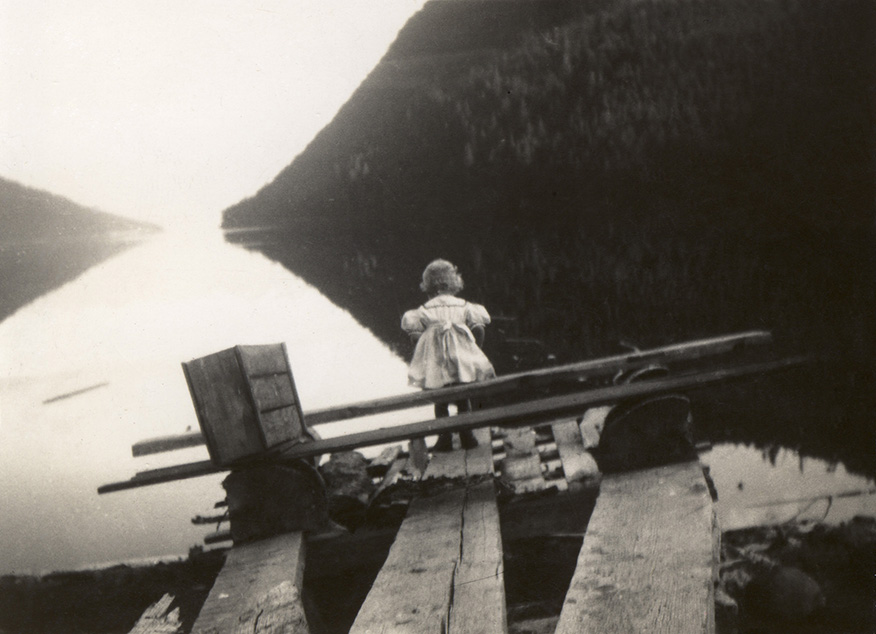
Beside my computer, on my desk, sits a small, framed photograph of a child wearing a blue and white seersucker dress with smocked bodice, embroidered pink flowers shirring the fabric bracketed by puffy sleeves. How is it possible that I remember the details of that dress, even though this picture—my only picture of it—was snapped in black and white!

Occasionally, when the stresses of everyday life seem too much to bear, I hold this image in the palm of my hand. I travel back in time to that makeshift bench of weathered boards beside the lake. I marvel, again, at the shaggy green of forested mountains stretching off to the horizon and rising steeply up on either side of the bay. I evoke the sweet smell of cedar. There—on my right—the Valhalla Range casts its self-portrait upon the surface of the water, brush-like strokes of emerald and jade reaching as far as the shallows near my feet. A pathway of shimmering sunlight on mirrored sky appears to beckon me towards a promising future.

Did I experience the solitude of nature, then, without being cognizant that I, like a golden eagle or a mountain goat, was an integral part of its weave? Perhaps I was simply watching minnows darting between the submerged planks of an unused boat launch. Or perhaps that particular moment in time was a defining one for me—the moment in which I began to grow aware of the vastness of the universe in contrast to my own small self. For whatever reason I was drawn there to sit, surely my soul was being fed and enriched.

Even today, this tranquil scene elicits a longing in me to protect and nurture the two-year old seated there, she who remains an intrinsic part of my identity.

Playing with Words

The late Madeleine L’Engle made the following wry observation with respect to her writing, and I can’t help but agree with her initial premise, though not always the second:

You have to write the book that wants to be written. And if the book will be too difficult for grown-ups, then you write it for children.”

Classic Children's Books

Classic Children’s Books

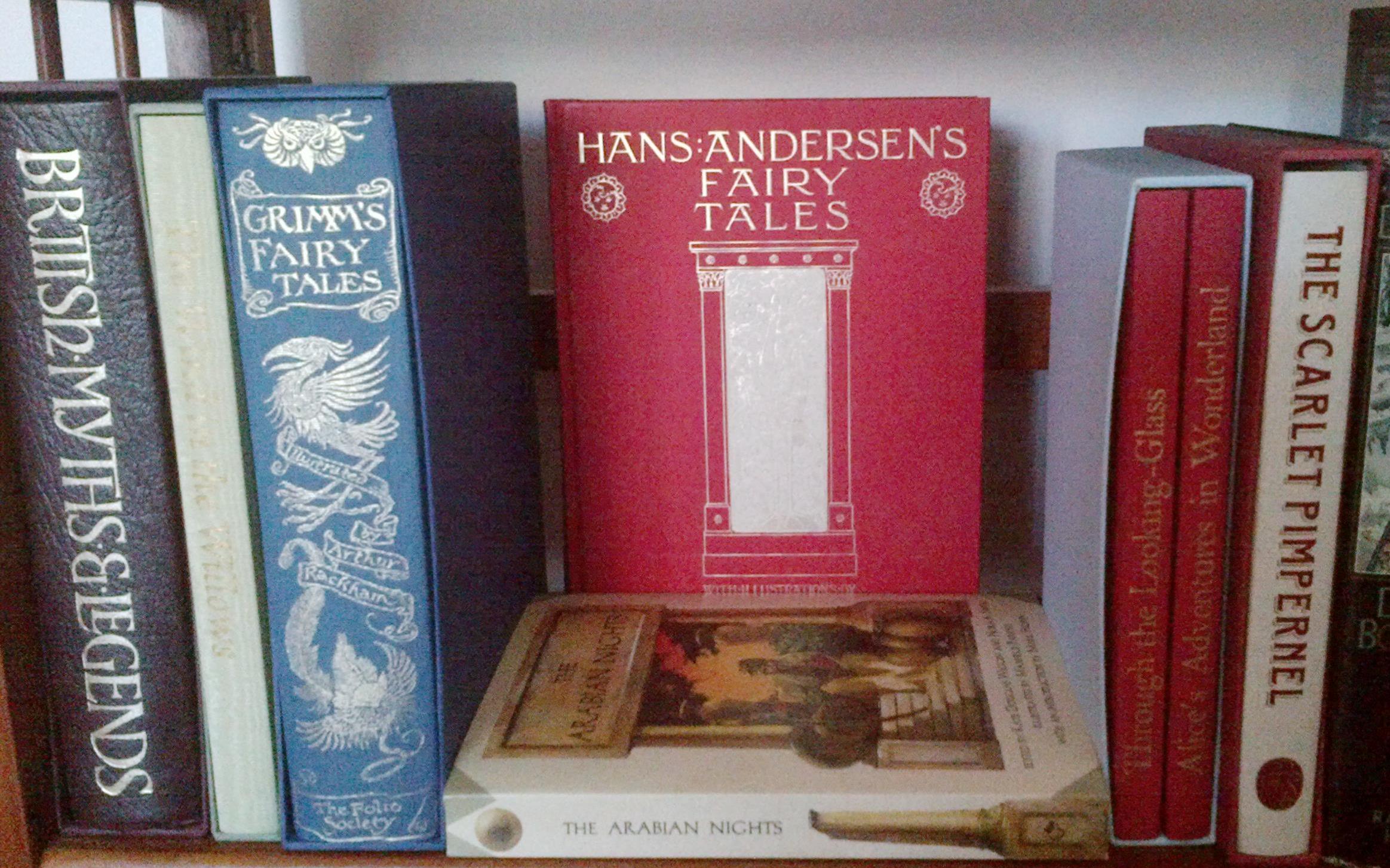
The best books for children and teens—those that become classics—often possess the same appeal for adults as they do for younger readers. The Chronicles of Narnia by C.S. Lewis, The Lord of the Rings by J.R.R. Tolkien, and J.K. Rowling’s Harry Potter series have maintained their popularity over years, and even decades. I suspect the number of readers worldwide who first discovered these tales as adults, would rival the accumulated numbers of children and young people who came to them during their pre-teen and teen years. I remember reading such books as David Copperfield, Grimm’s Fairytales, The Arabian Nights, the Book of Knowledge encyclopedia, as well as several mysteries written by Agatha Christie, Erle Stanley Gardner and Dorothy Sayers–at the age of eleven or so. If I didn’t understand a word right away, I would soon pick up the meaning from the context, as most children will do over time. This may explain why I had trouble falling asleep at night, and why I had frequent nightmares.

Playing with Words

Playing with Words

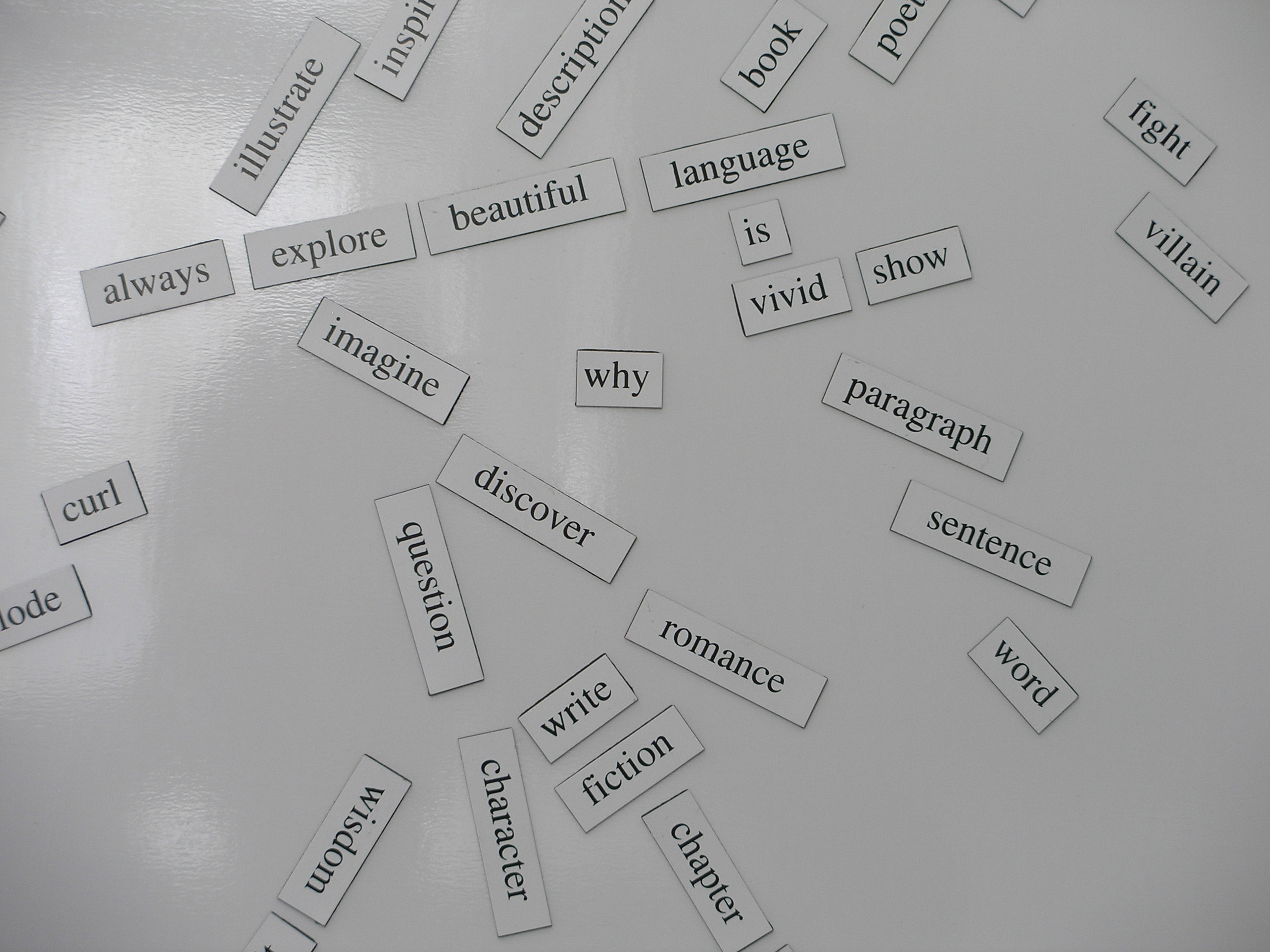
I would have to say that the phrase “playing with words” has nothing to do with the targeted age of the reader, and everything to do with freeing the creative mind. The makers of magnetic words that can be arranged into a poem on the side of a fridge understood that concept perfectly—and made money from it at the same time.

I still remember a day from my childhood when my sister and I spontaneously created a new form of entertainment to amuse ourselves. We were both curled up with a book at the opposite ends of a sofa. I don’t know what got us started, but we began to take turns at reading a sentence aloud from the page we each had open before us. The results were belly aching hilarious at times, or even uncanny in the way the sentences would sometimes relate to one another, so much so that a totally different plot from those of the original texts would sometimes develop like invisible ink becoming visible on a page. You could say we’d been “playing with words”—the words of published authors. (Whether they would have approved of that, or not, is another matter!)

Years ago, when the writers’ group I belong to–Inklinks–gathered for the first time, one of our members mentioned having read a book entitled The Empty Box, a collection of stories by well-known authors, all of whom had been invited to write on the same subject. It sounded like an intriguing idea, and so we borrowed that title to use as our own personal writing prompt in preparation for the next meeting. As any writer will tell you, it’s almost impossible to fall asleep at night after your creative impulse has been sparked in such a way. While lying awake, my thoughts ricocheted from one idea to another: The “empty box” became an “empty shoe box” in my mind, which made me wonder what kind of shoes might have been stored in it. (I immediately visualized a pair of glass slippers, suppressing a giggle so as not to wake my husband.) Glass slippers, of course, led me to think of a “prince” and the possibility of “wedding gifts” in his future, which looped back to not just one empty box, but lots and lots of them! Why were they all empty? I knew I had to get out of bed and jot down an answer before I could get any rest, and so I did. The next day my original fairy tale practically wrote itself.

Similarly, our group left another meeting with a “prompt” that consisted of the following ten words that we were to use in a writing exercise: kit, bodega, pennywhistle, witless, tuatara, quarter notes, retainer, culinary, cottage pudding, and cilantro–all seemingly unrelated. True, but not for long! I lay awake “mulling” them over until they swam into place for me like synchronized swimmers who knew exactly where they belonged before the performance started, before it—the story—was even choreographed, or written down, as the case may be. As with my first example of wordplay, I ended up with another quirky tale that seemed to flow from my pen without any effort when I sat at my desk to write it the next morning.  Maybe you should give those words a try yourself–have fun!  (You don’t have to come up with a children’s story; they’ll work just in well in adult stories or poetry.)

As many of you know, creative writing can be both exhilarating and painstakingly hard work at the same time. As long as “playing with words” is something that both children and adults enjoy in the process of freeing their imaginations, I believe it’s the perfect heading for this post. Words should leap, tumble, flow, rain down, plod, scatter, tremble or whatever else you would have them do on a page; most of all, they should come alive for your readers and be shared!