Solitude

Solitude sm
Beside my computer, on my desk, sits a small, framed photograph of a child wearing a blue and white seersucker dress with smocked bodice, embroidered pink flowers shirring the fabric bracketed by puffy sleeves. How is it possible that I remember the details of that dress, even though this picture—my only picture of it—was snapped in black and white!

Occasionally, when the stresses of everyday life seem too much to bear, I hold this image in the palm of my hand. I travel back in time to that makeshift bench of weathered boards beside the lake. I marvel, again, at the shaggy green of forested mountains stretching off to the horizon and rising steeply up on either side of the bay. I evoke the sweet smell of cedar. There—on my right—the Valhalla Range casts its self-portrait upon the surface of the water, brush-like strokes of emerald and jade reaching as far as the shallows near my feet. A pathway of shimmering sunlight on mirrored sky appears to beckon me towards a promising future.

Did I experience the solitude of nature, then, without being cognizant that I, like a golden eagle or a mountain goat, was an integral part of its weave? Perhaps I was simply watching minnows darting between the submerged planks of an unused boat launch. Or perhaps that particular moment in time was a defining one for me—the moment in which I began to grow aware of the vastness of the universe in contrast to my own small self. For whatever reason I was drawn there to sit, surely my soul was being fed and enriched.

Even today, this tranquil scene elicits a longing in me to protect and nurture the two-year old seated there, she who remains an intrinsic part of my identity.

Guyana Diaries

This slideshow requires JavaScript.

I have many wonderful memories of the fourteen months my husband Dennis and I lived in Guyana, and a few hair-raising ones, too. There was only one highway along the coast in 1967, and for the most part, it was flat and straight. Whenever we travelled to the capital city of Georgetown (a five hour trip, which in Canada would have taken an hour), we needed to be in front of the house at 4:30 a.m. to flag down a passing “hire car” that would drive us as far as New Amsterdam. From there, we would catch the ferry across the Berbice River. Then we boarded a train to take us the rest of the way to our destination.

Now for the hair-raising part! Considering the speed at which some of the drivers drove, it was as if they were taking part in a qualifying heat for the Grand Prix; the dangerous risks they sometimes took in passing each other on the road sent our blood-pressures soaring. While a wild ride was in progress, the stories of our fellow passengers, though somewhat entertaining, would often raise my level of anxiety. Perched on the edges of our seats, white-knuckled, Dennis and I would be forced to listen to snatches of conversation that would include references to a recent murder, or robbery, or home invasion. We were horrified, one day, when we saw the driver of the car ahead of us hit a cyclist. The impact sent the victim flying through the air, where he landed far from where it happened. The guilty car owner did not stop, nor did the man driving ours, despite our pleading.

Thankfully, the joy we experienced in getting to know our students, all eager to learn, meant much more to us than the few “hair-raising” events we remember.  Although we were preparing them for the Cambridge University Entrance Exams, O Levels (I was teaching English Literature and Language; Dennis taught Science and Math), I tried to find extra books for them that were outside the strictly British-based curriculum, and in particular, novels and stories written by West Indian authors–ones that they could relate to in their day to day lives.

The enthusiasm of the kids for the books I found while on a shopping expedition to Georgetown, made the trips there worthwhile. These included several anthologies of literature written by Caribbean authors that were appropriate for Forms I-VI, and novels, by such well-known authors as V.S. Naipaul (originally from Trinidad; winner of the 2001 Nobel Prize in Literature), George Lamming (Barbados) and Andrew Salkey (Jamaica). On a trip to Mackenzie (now Linden) by speed boat up the Demerara River, we were thrilled to meet the Guyanese poet A.J. Seymour (1914-1990) while touring the Demerara Bauxite Mine where he had been working as a Public Relations Officer. (The company is now the Linden Mining Enterprise)

Seymour’s Name Poem may be found in the book Selected Poems / A.J. Seymour, and is a wonderful example of his appreciation for the origins of place names.  Among those he mentions in his poem, are representatives of Amerindian (Kwebanna on the Waini); Dutch (Kykoveral, Stabroek); French (Le Ressouvenir and Le Repentir); English (Hid in Adventure, Bee Hive, Friendship); and Spanish (Santa Rosa).  He ends his Name Poem with these words: “Beauty about us in the breathe [sic] of names,/ If but a wind blows, all their beauty wakes.” (38-39)

At that time, my favourite collection for kids in the 13-15 year old age range was entitled The Sun’s Eye: West Indian Writing for Young Readers compiled by Anne Walmsley (London : Longmans, Green and Co Ltd, 1968.)  Occasionally I will pull it off my bookshelf and reread some of the stories and poems.  Today I realize how dated the following poem by the late, Jamaican poet A.L. Hendriks may seem, yet I love the soft cadences of the lines within each verse:

An Old Jamaican Woman thinks about the Hereafter

 by A.L. Hendriks

                       “What would I do forever in a big place, who
                       have lived all my life in a small island?  
                       The same parish holds the cottage I was born in, all
                       my family, and the cool churchyard.
                                                                             I have looked
                       up at stars from my front verandah and have been afraid
                       of their pathless distances.  I have never flown 
                       in the loud aircraft nor have I seen palaces,
                       so I would prefer not to be taken up high nor 
                       rewarded with a large mansion. 
                                                                              I would like
                        to remain half-drowsing through an evening light
                        watching bamboo trees sway and ruffle for a valley-wind,
                        to remember old times, but not to live them again;
                        occasionally to have a good meal with no milk
                        nor honey for I don’t like them, and now and then to walk
                        by the grey sea-beach with two old dogs and watch
                        men bring up their boats from the water.
                                                                              For all this,
                        for my hope of heaven, I am willing to forgive my debtors
                        and to love my neighbour…
                                                                             although the wretch throws stones
                        at my white rooster and makes too much noise in her damn
                                       backyard.”  (Lines 1-24)
Ocean Liners, Then and Now

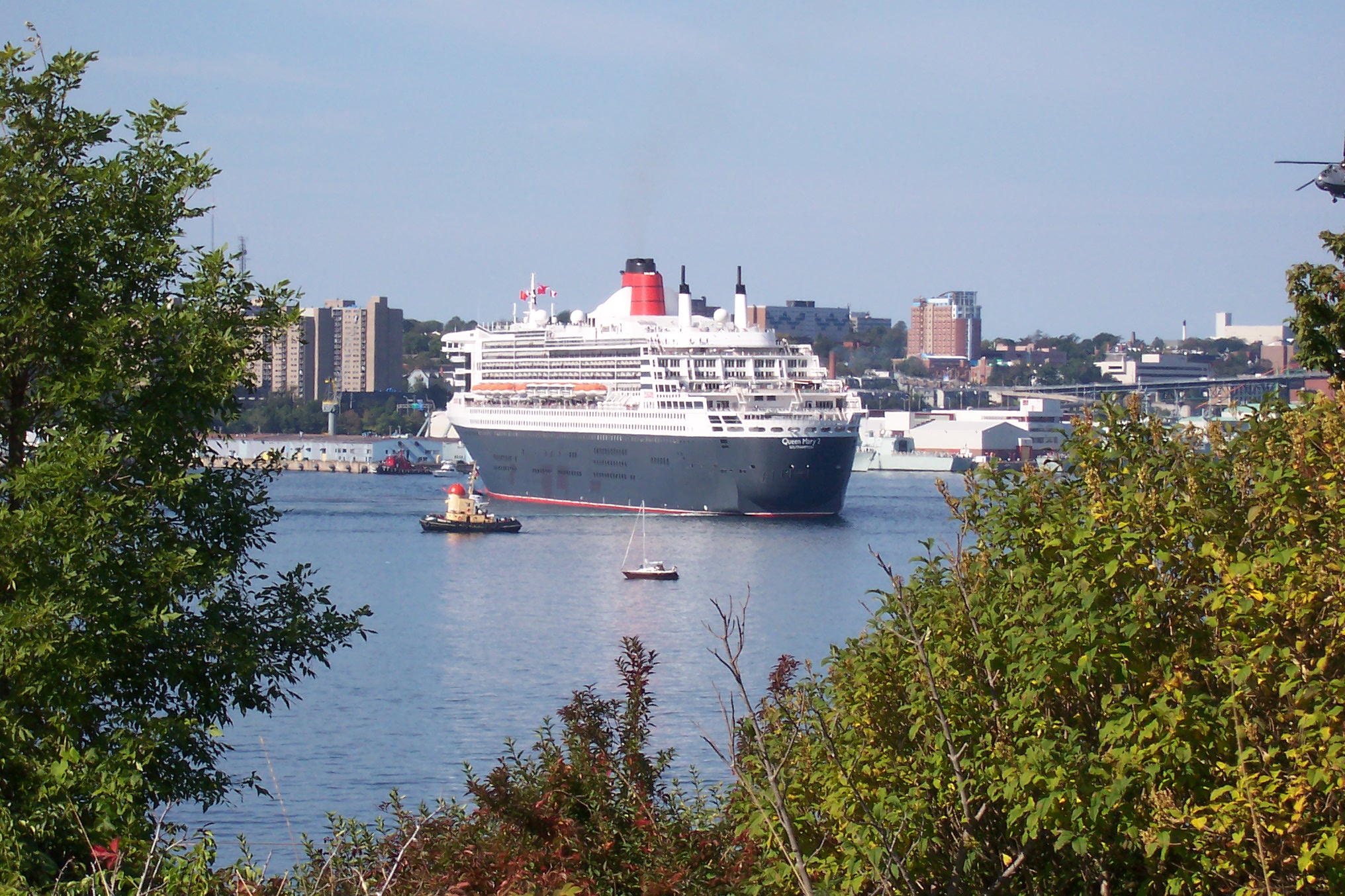
Queen Mary 2, 148,428 Gross Tonnage

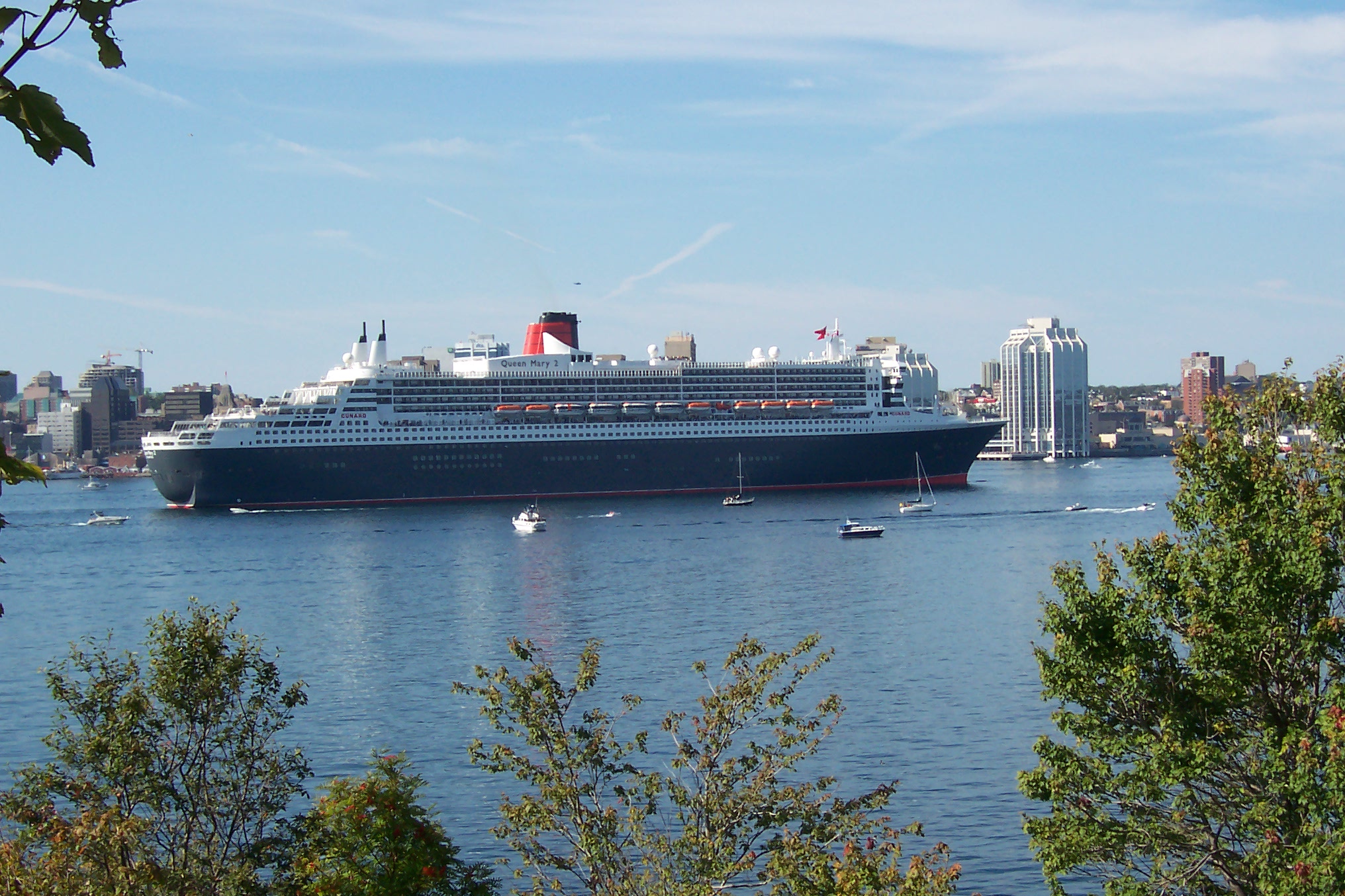
Queen Mary 2 in Halifax Harbour (2004). 148,428 Gross Registered Tonnage

Having mentioned a couple of ships in my blog to date (on my Family Memoirs and My Life in Japan pages), I was curious to know how the gross registered tonnage (GRT) of the older ships my family travelled on compared with the GRTs of those I’ve observed entering Halifax Harbour in recent years. In the ’50s and ’60s, the former seemed both large and luxurious to me. Now when I observe cruise ships arriving to dock, I wonder why I ever thought the vessels I list below were so grand and magnificent.  (But that’s how I remember all but one of them!)

S.S. President Wilson: 15,359 GRT; San Francisco to Yokohama via Hawaii (Nov. 1952) (For an image, see my postcard displayed on my My Life in Japan page in the Menu tab above.)

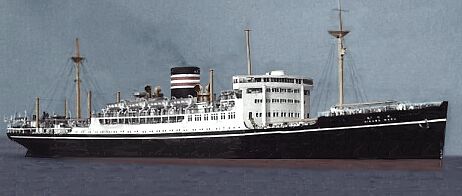
The Hikawa Maru. (Image belonging to Reuben Goosens, http://www.ssmaritime.com)

NYK Hikawa Maru:  11,622 GRT; Kobe to Vancouver via Hawaii (July 1957)

SS China Mail: 8,616 GRT diesel freighter; Seattle to Japan via the coast of B.C. and Alaska. (August 1958) I’m not sure if this information applies to the ship my family travelled on; I was unable to find any reference suggesting that it had made crossings of the Pacific Ocean in the late 1950s.  When I first laid eyes on The China Mail, it looked small, even for a freighter, and my parents, sister and I boarded with great trepidation.  We encountered a couple of severe storms on our northern Pacific crossing, making it the least favourite of our voyages.

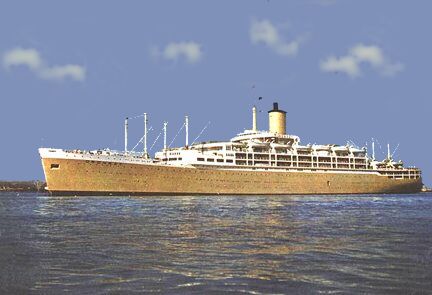
P&O Oronsay: 27,632-28,136 GRT; Kobe, Japan to Tilbury, England via Hong Kong, Manila, Singapore, Bombay, Aden, Suez Canal, Port Said, Naples, Gibraltar and Plymouth.  (July-August 15, 1962).

RMS Oronsay
(Postcard from the private collection of Reuben Goosens, author of http://www.ssmaritime.com)

A memoir written about this same voyage can be found at www.ssmaritime.com//ssOronsay_4.htm. The author, Rick Delaney, had been a thirteen year old passenger at the time. Reading through it triggered my own wonderful memories, as he described many of the same places and events my family had experienced, including a two hour bus trip through the desert to Cairo where we toured the Museum as well as the site of the pyramids before meeting up with the ship again in Port Said.  Another good read that carried me back to those days was Michael Ondaatje’s novel, The Cat’s Table.  As a young boy in 1954, the author had traveled from Sri Lanka to Tilbury, England on the Oronsay, without adult accompaniment. In the novel he gives this ship “an imagined rendering” as the setting for his fictional tale of eleven-year old Mynah and his friends.

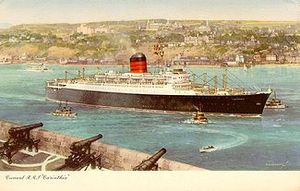
The Carinthia, Passing Quebec City.  (Wikipedia Image)

The Carinthia, Passing Quebec City. (Wikipedia Image)

RMS Carinthia (1956) Cunard Line: 21,800 GRT; Liverpool, England to Montreal, Canada. (August 1962)  As soon as we boarded, my parents, sister and I were required to visit the health clinic to be examined for smallpox symptoms because it had come to the authorities attention that a child on the Oronsay (the P&O liner from which we’d disembarked a week earlier) had developed the disease.  I can’t imagine how they were able to trace the whereabouts of all the passengers from that particular voyage, or if it had even been possible.

Queen Mary 2 turning to dock at Pier 22.  Theodore Tugboat in foreground.

Queen Mary 2 turning in place, preparing to dock. Theodore Tugboat in foreground.

Now if I compare the gross registered tonnage (GRT) of the largest ship I travelled on–The P&O Oronsay at approximately 28,000 GRT–with the Queen Mary 2 at 148,428 GRT, I find the difference mind-boggling.  Other sea-going vessels constructed since 2004, including MS Freedom of the Seas (Royal Caribbean International), have already surpassed the Queen Mary 2 in sheer size.  Would I ever want to travel on one of them?  I’m not so sure.  Many of the multi-decked ones look taller than a high rise building and top heavy, to boot, as if they could easily roll over in heavy seas!

Playing with Words

The late Madeleine L’Engle made the following wry observation with respect to her writing, and I can’t help but agree with her initial premise, though not always the second:

You have to write the book that wants to be written. And if the book will be too difficult for grown-ups, then you write it for children.”

Classic Children's Books

Classic Children’s Books

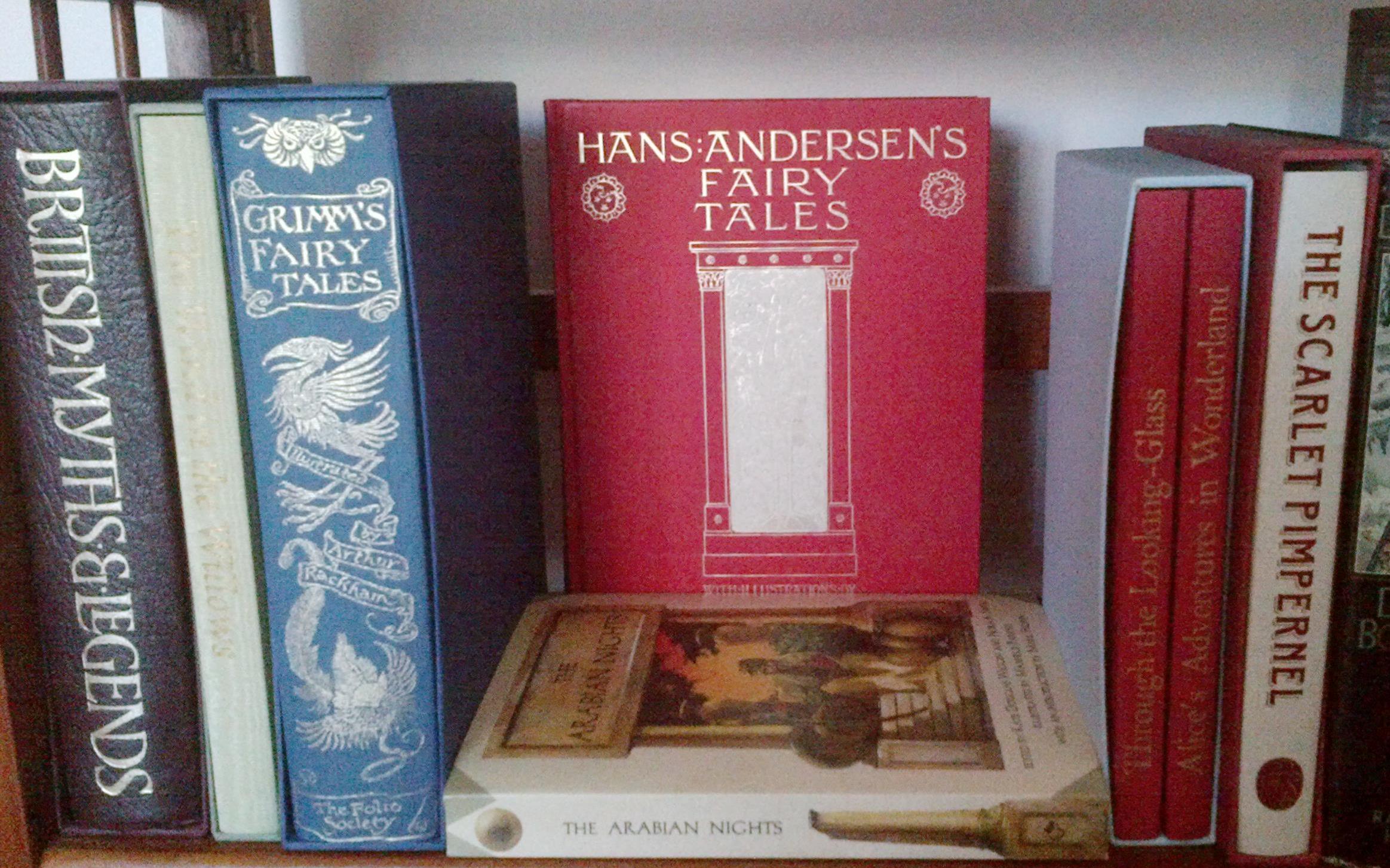
The best books for children and teens—those that become classics—often possess the same appeal for adults as they do for younger readers. The Chronicles of Narnia by C.S. Lewis, The Lord of the Rings by J.R.R. Tolkien, and J.K. Rowling’s Harry Potter series have maintained their popularity over years, and even decades. I suspect the number of readers worldwide who first discovered these tales as adults, would rival the accumulated numbers of children and young people who came to them during their pre-teen and teen years. I remember reading such books as David Copperfield, Grimm’s Fairytales, The Arabian Nights, the Book of Knowledge encyclopedia, as well as several mysteries written by Agatha Christie, Erle Stanley Gardner and Dorothy Sayers–at the age of eleven or so. If I didn’t understand a word right away, I would soon pick up the meaning from the context, as most children will do over time. This may explain why I had trouble falling asleep at night, and why I had frequent nightmares.

Playing with Words

Playing with Words

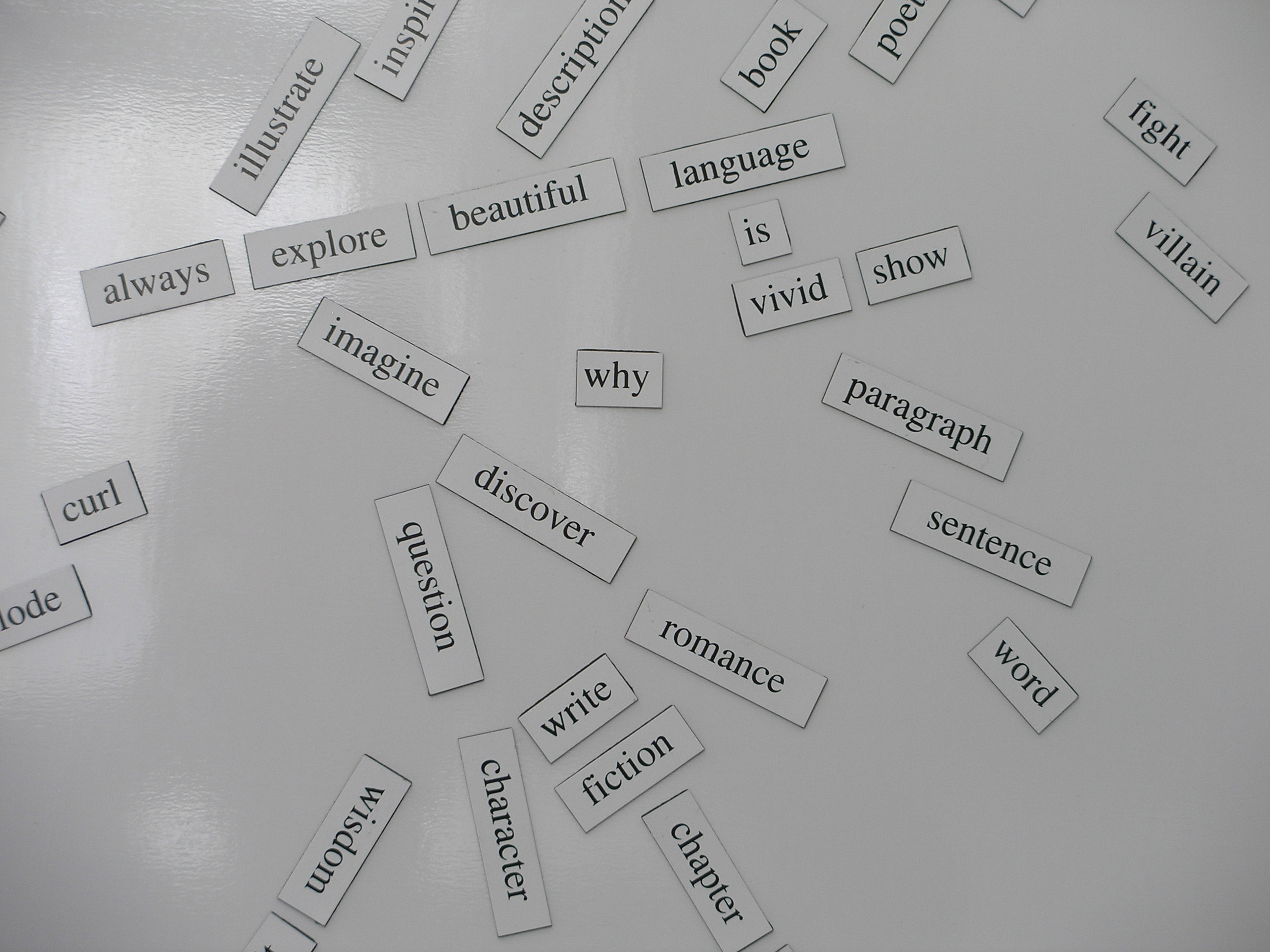
I would have to say that the phrase “playing with words” has nothing to do with the targeted age of the reader, and everything to do with freeing the creative mind. The makers of magnetic words that can be arranged into a poem on the side of a fridge understood that concept perfectly—and made money from it at the same time.

I still remember a day from my childhood when my sister and I spontaneously created a new form of entertainment to amuse ourselves. We were both curled up with a book at the opposite ends of a sofa. I don’t know what got us started, but we began to take turns at reading a sentence aloud from the page we each had open before us. The results were belly aching hilarious at times, or even uncanny in the way the sentences would sometimes relate to one another, so much so that a totally different plot from those of the original texts would sometimes develop like invisible ink becoming visible on a page. You could say we’d been “playing with words”—the words of published authors. (Whether they would have approved of that, or not, is another matter!)

Years ago, when the writers’ group I belong to–Inklinks–gathered for the first time, one of our members mentioned having read a book entitled The Empty Box, a collection of stories by well-known authors, all of whom had been invited to write on the same subject. It sounded like an intriguing idea, and so we borrowed that title to use as our own personal writing prompt in preparation for the next meeting. As any writer will tell you, it’s almost impossible to fall asleep at night after your creative impulse has been sparked in such a way. While lying awake, my thoughts ricocheted from one idea to another: The “empty box” became an “empty shoe box” in my mind, which made me wonder what kind of shoes might have been stored in it. (I immediately visualized a pair of glass slippers, suppressing a giggle so as not to wake my husband.) Glass slippers, of course, led me to think of a “prince” and the possibility of “wedding gifts” in his future, which looped back to not just one empty box, but lots and lots of them! Why were they all empty? I knew I had to get out of bed and jot down an answer before I could get any rest, and so I did. The next day my original fairy tale practically wrote itself.

Similarly, our group left another meeting with a “prompt” that consisted of the following ten words that we were to use in a writing exercise: kit, bodega, pennywhistle, witless, tuatara, quarter notes, retainer, culinary, cottage pudding, and cilantro–all seemingly unrelated. True, but not for long! I lay awake “mulling” them over until they swam into place for me like synchronized swimmers who knew exactly where they belonged before the performance started, before it—the story—was even choreographed, or written down, as the case may be. As with my first example of wordplay, I ended up with another quirky tale that seemed to flow from my pen without any effort when I sat at my desk to write it the next morning.  Maybe you should give those words a try yourself–have fun!  (You don’t have to come up with a children’s story; they’ll work just in well in adult stories or poetry.)

As many of you know, creative writing can be both exhilarating and painstakingly hard work at the same time. As long as “playing with words” is something that both children and adults enjoy in the process of freeing their imaginations, I believe it’s the perfect heading for this post. Words should leap, tumble, flow, rain down, plod, scatter, tremble or whatever else you would have them do on a page; most of all, they should come alive for your readers and be shared!